Well water is widely used in residential, agricultural, and industrial applications. However, untreated well water often contains contaminants such as iron, manganese, sulfur compounds, bacteria, and unpleasant odors that affect water quality and usability. Proper water treatment is essential to ensure safe and clean water for daily use.
One of the most effective chemicals used for well water purification is potassium permanganate. Known for its strong oxidizing properties, potassium permanganate is commonly used in water treatment systems to remove iron, manganese, hydrogen sulfide odors, and organic impurities.
In this complete guide, we will explain how potassium permanganate well water treatment works, dosage guidelines, advantages, applications, and safety precautions.
Why Well Water Needs Treatment
Groundwater naturally absorbs minerals and contaminants from soil and surrounding geological formations. As a result, untreated well water may contain several impurities that affect water quality, taste, smell, and safety.
Common Contaminants in Well Water
Well water commonly contains:
- Iron
- Manganese
- Hydrogen sulfide
- Bacteria
- Organic matter
- Sediments
- Hardness-causing minerals
These contaminants can create staining, unpleasant odor, bad taste, clogged pipelines, and damage to plumbing systems.
Effects of Iron and Manganese
Iron and manganese are among the most common problems in well water systems.
Excess iron in water can cause:
- Red or brown stains on sinks and clothes
- Metallic taste
- Clogged pipes and fixtures
- Reduced efficiency of appliances
High manganese levels can result in:
- Black stains on fixtures
- Bitter taste
- Dark discoloration in water
- Build-up in plumbing systems
Water treatment with potassium permanganate helps oxidize and remove these contaminants effectively.
What is Potassium Permanganate?
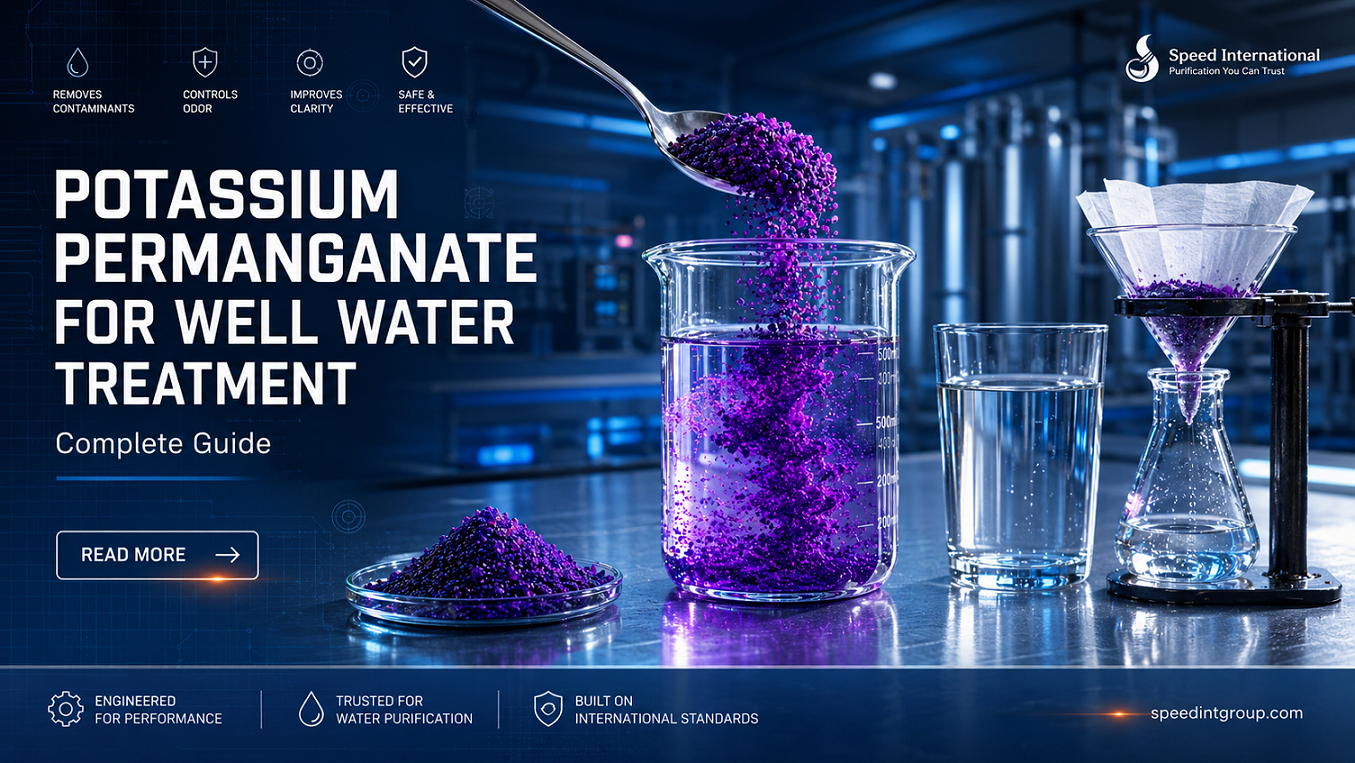
Potassium permanganate, also known as KMnO4, is a strong oxidizing chemical widely used in water treatment applications.
It appears as a dark purple crystalline compound and is highly effective for treating:
- Iron contamination
- Manganese contamination
- Sulfur odor
- Organic impurities
- Biological growth in water systems
Potassium permanganate used in water treatment works by converting dissolved contaminants into solid particles that can be filtered easily.
How Potassium Permanganate Works
Potassium permanganate in water treatment acts as an oxidizing agent. It reacts chemically with dissolved minerals and contaminants present in well water.
Oxidation Process Explained
When potassium permanganate is added to water:
- It oxidizes dissolved iron and manganese
- Converts contaminants into insoluble particles
- Particles are filtered out through filtration systems
This oxidation process improves water clarity, taste, and overall quality.
Potassium permanganate water treatment systems are commonly used with greensand filters and industrial filtration equipment.
Removal of Odors and Stains
Hydrogen sulfide gas in well water often causes a rotten egg smell. Potassium permanganate helps neutralize sulfur compounds responsible for unpleasant odors.
It also reduces:
- Rust stains
- Black manganese stains
- Water discoloration
- Metallic taste
This makes potassium permanganate for purifying water highly effective in residential and industrial applications.
Potassium Permanganate Dosage Guidelines
Using the correct potassium permanganate dosage for water treatment is extremely important for safe and effective purification.
The dosage depends on:
- Iron concentration
- Manganese levels
- Water flow rate
- Sulfur contamination
- System size
Correct Dosage Calculation
Typical dosage guidelines include:
- 1 mg/L potassium permanganate for approximately 1 mg/L iron
- Higher dosage may be required for manganese and sulfur removal
Accurate water testing is recommended before determining dosage levels.
Water treatment professionals often calculate the required potassium permanganate dosage based on laboratory water analysis.
Safety Precautions During Treatment
Although potassium permanganate is effective, it must be handled carefully.
Important safety measures include:
- Wear protective gloves and goggles
- Avoid direct skin contact
- Store in a dry and cool environment
- Prevent overfeeding into water systems
- Keep away from combustible materials
Excess potassium permanganate can leave pink or purple discoloration in water, indicating overdosing.
Always follow manufacturer and water treatment guidelines.
Potassium Permanganate Water Treatment System
A potassium permanganate water treatment system usually includes:
- Chemical feed system
- Retention tank
- Greensand or filtration media
- Backwash filtration unit
The treatment process works in multiple stages:
- Potassium permanganate is injected into the water
- Oxidation reaction occurs
- Contaminants convert into solid particles
- Filtration system removes particles
- Clean water flows into the supply system
These systems are commonly installed in:
- Residential well water systems
- Industrial water treatment plants
- Municipal water facilities
- Agricultural water systems
Advantages of Potassium Permanganate Well Water Treatment
Potassium permanganate well water treatment offers several important benefits.
Cost-Effective Purification
Compared to many advanced water treatment methods, potassium permanganate treatment is affordable and efficient.
It reduces maintenance costs associated with:
- Plumbing repairs
- Pipe clogging
- Appliance damage
- Water staining issues
Long-Term Water Quality Improvement
Regular water treatment with potassium permanganate improves overall water quality over time.
Benefits include:
- Cleaner water
- Better taste and odor
- Reduced iron and manganese levels
- Improved filtration performance
- Longer plumbing lifespan
Effective Oxidation Capability
KMnO4 water treatment is highly effective for oxidizing dissolved contaminants that are difficult to remove through standard filtration alone.
Versatile Industrial Applications
Potassium permanganate water treatment is widely used across:
- Residential water systems
- Industrial processing plants
- Wastewater treatment facilities
- Municipal water purification
Applications of Potassium Permanganate in Water Treatment
Potassium permanganate is used in several water treatment applications, including:
- Iron removal systems
- Manganese removal systems
- Sulfur odor control
- Wastewater treatment
- Industrial filtration systems
- Drinking water purification
Because of its powerful oxidation properties, water treatment potassium permanganate remains one of the most reliable treatment chemicals in the industry.
Frequently Asked Questions
What is potassium permanganate used for in water treatment?
Potassium permanganate is used to remove iron, manganese, sulfur odors, and organic contaminants from water through oxidation.
Is potassium permanganate safe for well water treatment?
Yes, when used in the correct dosage and according to treatment guidelines, potassium permanganate is safe and highly effective.
How does potassium permanganate remove iron from water?
It oxidizes dissolved iron into solid particles that can be filtered out easily.
What happens if too much potassium permanganate is added?
Overdosing can cause pink or purple discoloration in water and may affect water quality.
Can potassium permanganate remove bad odors from well water?
Yes, it effectively removes hydrogen sulfide odors and improves water taste.
Conclusion
Potassium permanganate well water treatment is one of the most effective methods for removing iron, manganese, sulfur odors, and other contaminants from groundwater systems.
Its strong oxidation properties make it highly suitable for residential, industrial, and municipal water treatment applications. When used correctly, potassium permanganate water treatment systems improve water clarity, reduce staining, eliminate odors, and enhance long-term water quality.
For reliable water treatment chemicals and industrial solutions, Speed International provides high-quality products designed for effective and efficient water purification applications.