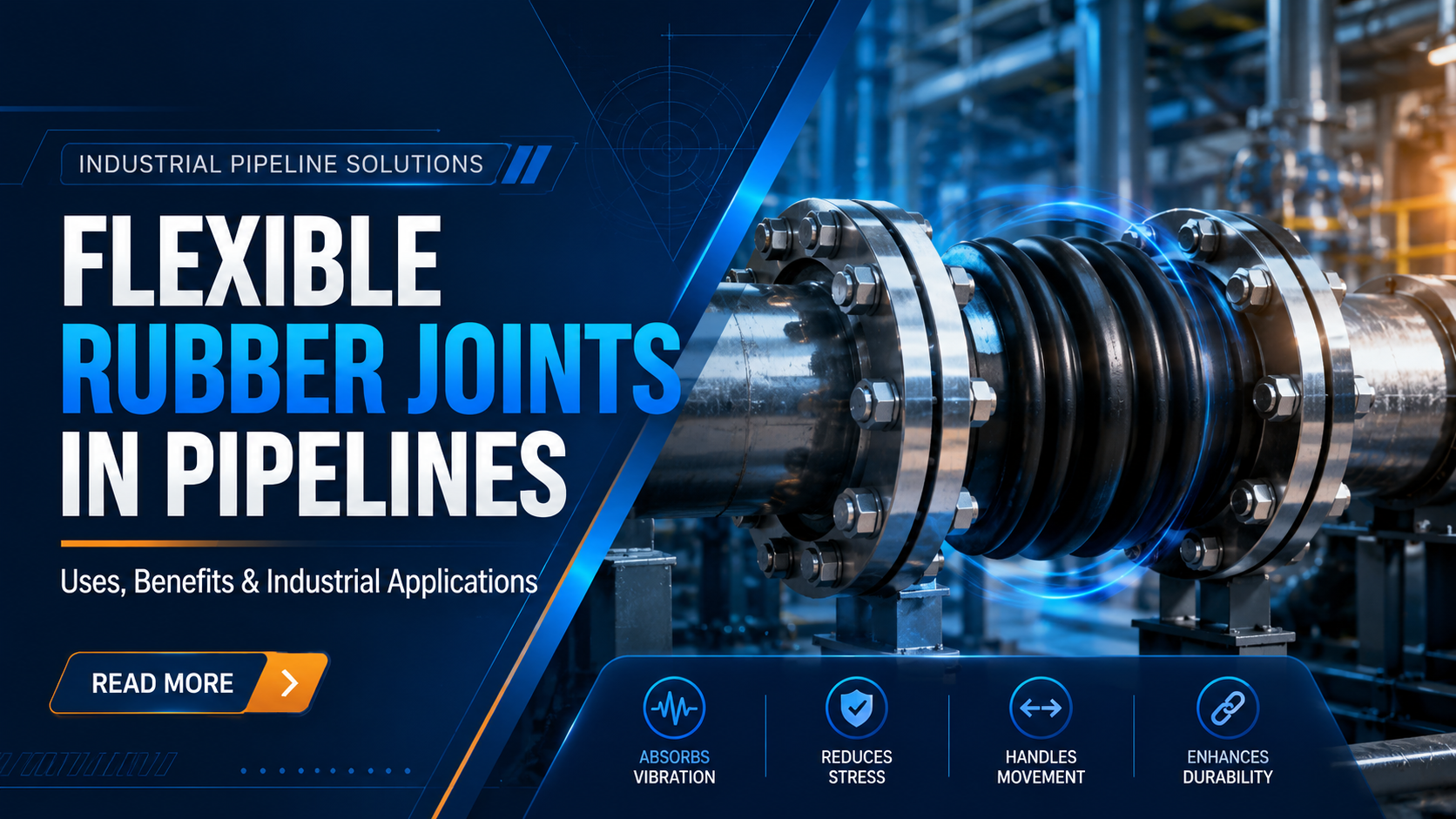
Industrial pipeline systems operate under constant pressure, vibration, temperature variation, and movement. Without proper flexibility, pipelines can suffer from leakage, cracking, equipment damage, and costly maintenance issues. This is where flexible rubber joints play an important role.
Flexible rubber joints are widely used in industrial pipeline systems to absorb vibration, reduce noise, compensate for thermal expansion, and improve overall system durability. Industries such as water treatment, HVAC, power plants, chemical processing, and oil & gas rely heavily on flexible expansion joints for smooth and safe operations.
In this blog, we will explore the uses, benefits, types, installation methods, and maintenance tips for flexible rubber joints in pipeline systems.
What Are Flexible Rubber Joints?
Flexible rubber joints are specially designed connectors installed between two sections of pipelines to absorb movement, vibration, and stress. These joints are manufactured using high-quality rubber materials with reinforcement layers to ensure strength and flexibility.
They are also commonly known as:
- Rubber expansion joints
- Flexible expansion joints
- Pipeline expansion joints
- Industrial pipeline joints
Flexible rubber joints help maintain pipeline stability and protect connected equipment from operational stress.
Most rubber expansion joints manufacturers design these joints to handle axial, lateral, and angular movement in industrial piping systems.
Importance in Pipeline Systems
Pipeline systems experience continuous operational stress due to:
- Pressure fluctuations
- Mechanical vibration
- Thermal expansion and contraction
- Pump movement
- Misalignment
Without flexible joints, these stresses can directly affect pumps, valves, compressors, and pipe structures.
Flexible rubber joints are important because they:
- Absorb vibration from industrial equipment
- Reduce operational noise
- Prevent pipe damage
- Improve pipeline flexibility
- Protect connected machinery
- Increase system lifespan
This is why flexible expansion joints are widely used in modern industrial pipeline systems.
Key Benefits of Flexible Rubber Joints
Vibration Absorption
One of the biggest advantages of flexible rubber joints is vibration reduction. Pumps and rotating equipment generate vibration that can damage pipelines over time. Flexible joints absorb these vibrations and protect the system.
Noise Reduction
Flexible rubber joints help minimize sound transmission through piping systems, making industrial operations quieter and safer.
Thermal Expansion Compensation
Temperature changes cause pipelines to expand and contract. Flexible expansion joints absorb this movement and reduce stress on pipes and equipment.
Corrosion Resistance
Unlike metal joints, rubber joints provide excellent resistance against corrosion, chemicals, and moisture.
Easy Installation
Flexible rubber joints are lightweight and easier to install compared to rigid connectors, reducing installation time and labor costs.
Longer Pipeline Life
By minimizing stress and movement damage, flexible rubber joints improve the lifespan of industrial pipeline systems.
Reduced Maintenance Costs
Using pipeline expansion joints helps reduce equipment failures and maintenance expenses over time.
Types of Flexible Rubber Joints
Different industrial applications require different types of rubber joints. Leading rubber expansion bellows manufacturers offer multiple configurations based on pressure, movement, and fluid conditions.
Single Sphere Rubber Joints
Single sphere joints are compact and commonly used for moderate vibration and movement absorption.
Double Sphere Rubber Joints
These joints provide greater flexibility and are suitable for applications with higher movement requirements.
Threaded Rubber Joints
Threaded joints are mainly used in smaller pipeline systems where easy installation is required.
Flanged Rubber Expansion Joints
Flanged joints are widely used in industrial applications because they provide strong and leak-proof connections.
Arch Type Flexible Joints
Arch type joints are designed for enhanced movement absorption and better flexibility.
Industrial Applications of Flexible Rubber Joints
Flexible rubber joints are used across multiple industries due to their durability and performance.
Water Treatment Plants
Used in water supply and wastewater systems to reduce vibration and pressure stress.
HVAC Systems
Flexible joints help control vibration and noise in heating, ventilation, and air conditioning systems.
Chemical Industries
Chemical processing plants use rubber expansion joints because of their resistance to aggressive chemicals.
Power Plants
Power generation facilities use flexible expansion joints in cooling water and steam pipelines.
Oil and Gas Industries
Industrial pipeline joints are essential in oil and gas systems where pressure and vibration levels are high.
Marine Applications
Ships and marine systems use flexible joints to absorb engine vibration and pipeline movement.
Installation Process of Flexible Rubber Joints
Proper installation is necessary to achieve maximum performance and durability.
Step 1: Inspect the Joint
Check the flexible rubber joint for any visible damage before installation.
Step 2: Align the Pipeline
Ensure the pipes are properly aligned to avoid unnecessary stress on the joint.
Step 3: Install Between Flanges
Place the rubber joint carefully between the pipeline flanges.
Step 4: Tighten Bolts Evenly
Bolts should be tightened gradually in a crisscross pattern to maintain uniform pressure.
Step 5: Conduct Pressure Testing
After installation, perform leak and pressure tests to verify system performance.
Following installation guidelines from rubber joints manufacturers helps ensure long-term reliability.
Maintenance Tips for Flexible Expansion Joints
Regular maintenance improves performance and extends service life.
Perform Routine Inspection
Check joints regularly for signs of wear, cracks, or deformation.
Monitor Operating Conditions
Ensure pressure and temperature remain within recommended limits.
Check Bolt Tightness
Loose bolts can lead to leakage and joint failure.
Replace Damaged Joints Immediately
Damaged flexible joints should be replaced promptly to avoid pipeline breakdown.
Keep the System Clean
Clean pipelines and joints regularly to prevent debris buildup.
Proper maintenance ensures better efficiency and durability in industrial pipeline systems.
Why Choose High-Quality Rubber Expansion Joints?
Choosing reliable rubber expansion joints manufacturers is essential for long-term system performance. High-quality flexible rubber joints offer:
- Better durability
- Improved flexibility
- Higher pressure resistance
- Enhanced vibration absorption
- Lower maintenance costs
- Longer operational life
Industries should always select flexible expansion joints that match their pipeline specifications and operating conditions.
Frequently Asked Questions
What are flexible rubber joints used for?
Flexible rubber joints are used to absorb vibration, reduce noise, compensate for movement, and protect industrial pipeline systems from stress and damage.
How do rubber expansion joints work?
Rubber expansion joints absorb axial, lateral, and angular movement caused by thermal expansion, vibration, and pressure fluctuations.
Where are flexible expansion joints installed?
They are commonly installed near pumps, compressors, valves, HVAC systems, and industrial pipelines.
Why are flexible joints important in industrial pipeline systems?
Flexible joints improve pipeline durability, reduce maintenance costs, and protect connected equipment from vibration and stress.
Conclusion
Flexible rubber joints are essential components in modern industrial pipeline systems. Their ability to absorb vibration, reduce noise, compensate for movement, and improve durability makes them highly valuable across multiple industries.
From HVAC systems and water treatment plants to power generation and chemical industries, flexible expansion joints help improve operational efficiency and reduce maintenance costs.
If you are looking for reliable rubber expansion joints manufacturers, Speed International offers high-quality flexible rubber joints designed for durability, safety, and long-term industrial performance.