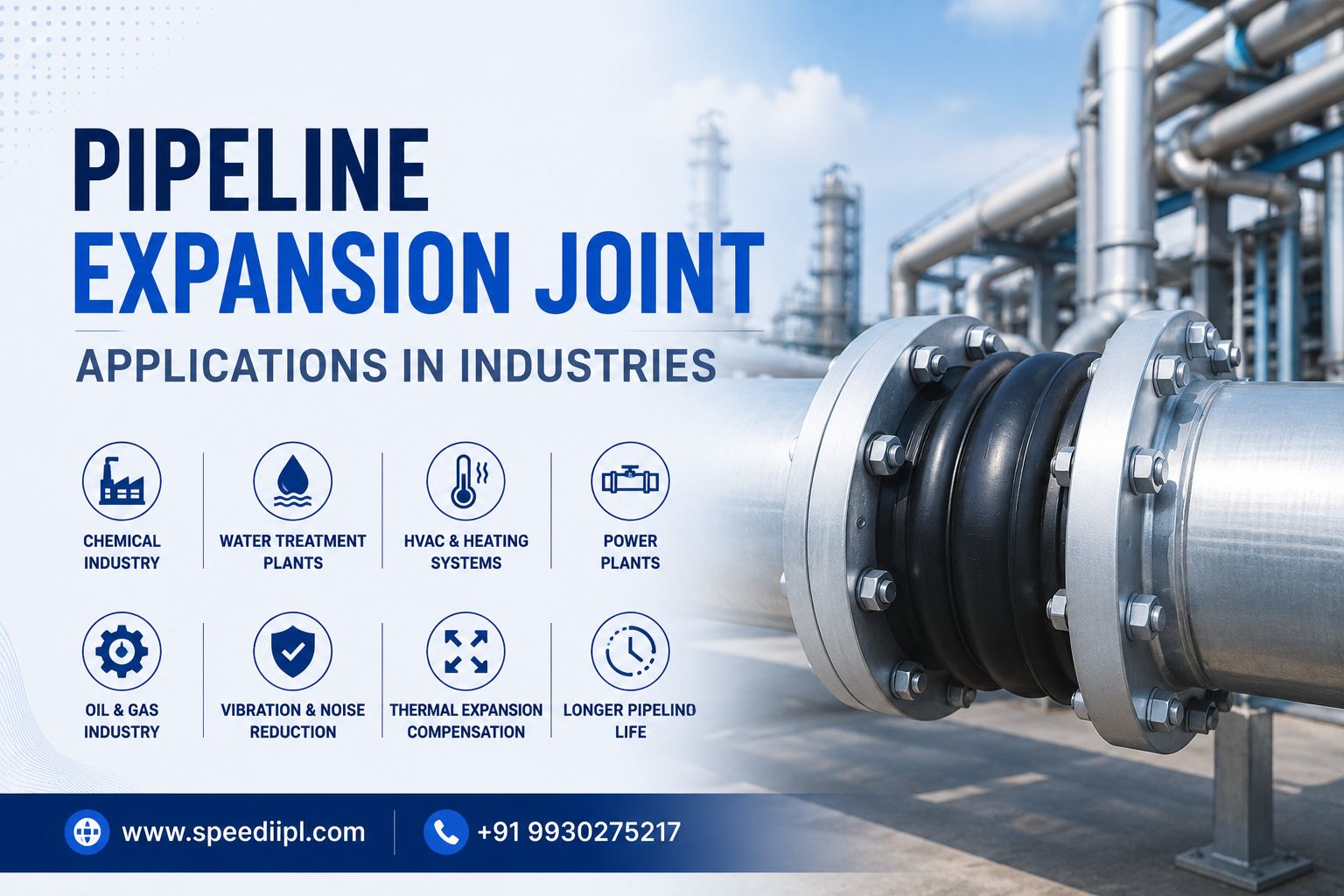
Industrial pipeline systems are exposed to constant stress due to temperature changes, pressure variations, vibration, and mechanical movement. Without proper flexibility, pipelines can develop cracks, leaks, or even complete system failure. This is where pipeline expansion joints play a critical role.
Pipeline expansion joints are designed to absorb movement, reduce vibration, and protect piping systems from damage. They are widely used across industries such as HVAC, water treatment, chemical processing, power plants, and manufacturing.
In this blog, we will explore pipeline expansion joint applications, benefits, installation practices, and how they improve industrial performance.
What Is a Pipeline Expansion Joint?
A pipeline expansion joint is a flexible connector installed between sections of piping to absorb movement and reduce stress caused by thermal expansion, vibration, and pressure changes.
Purpose of Expansion Joints in Pipelines
- Compensate for thermal expansion and contraction
- Absorb vibration from pumps and machinery
- Reduce noise in piping systems
- Prevent structural damage
- Improve system flexibility
Types of Rubber Expansion Joints
- Single sphere rubber joints
- Double sphere expansion joints
- Flanged rubber expansion joints
- Threaded flexible joints
- Metal and fabric expansion joints
Flexible rubber joints are among the most commonly used solutions due to their durability and flexibility.
Industrial Applications of Expansion Joints
Pipeline expansion joints are used in various industries to ensure efficient and safe operations.
HVAC and Building Systems
- Control vibration in heating and cooling systems
- Reduce noise transmission
- Improve equipment lifespan
Water Treatment Plants
- Used in pumping systems and pipelines
- Absorb pressure fluctuations
- Improve system durability
Chemical Industries
- Handle corrosive fluids
- Provide flexibility in complex piping layouts
- Ensure safe chemical transport
Power Plants
- Used in steam and cooling systems
- Manage thermal expansion
- Protect turbines and pumps
Oil and Gas Industries
- Handle high-pressure pipelines
- Reduce stress from temperature changes
- Improve safety in critical operations
Benefits of Flexible Rubber Joints
Flexible rubber expansion joints offer several advantages in industrial pipeline systems.
Vibration and Noise Reduction
- Absorb mechanical vibration
- Reduce operational noise
- Protect connected equipment
Thermal Expansion Control
- Compensate for temperature changes
- Prevent pipe deformation
Pressure and Movement Absorption
- Handle axial, lateral, and angular movement
- Maintain system stability
Corrosion Resistance
- Suitable for harsh environments
- Resistant to chemicals and moisture
Cost Efficiency
- Reduce maintenance costs
- Extend pipeline lifespan
Installation and Maintenance Best Practices
Proper installation ensures long-term performance of pipeline expansion joints.
Proper Alignment and Fitting Methods
- Align pipes correctly before installation
- Avoid excessive stretching or compression
- Use proper flange connections
Installation Tips
- Tighten bolts evenly
- Avoid over-tightening
- Follow manufacturer guidelines
Maintenance Tips for Industrial Pipelines
- Conduct regular inspections
- Check for cracks or wear
- Monitor pressure and temperature conditions
Common Problems and Solutions
Understanding common issues helps prevent failures.
Causes of Joint Failure
- Misalignment
- Excessive pressure
- Chemical degradation
- Poor installation
- Lack of maintenance
Preventing Leakage and Damage
- Use correct joint type
- Ensure proper installation
- Perform routine maintenance
- Replace worn-out joints promptly
Choosing the Right Expansion Joint Manufacturer
Selecting a reliable manufacturer ensures quality and performance.
Factors to Consider Before Buying
- Material quality
- Pressure and temperature rating
- Application compatibility
- Certifications and standards
Importance of Material Quality
High-quality rubber expansion joints provide:
- Better durability
- Improved flexibility
- Higher resistance to stress
- Longer service life
Best Practices for Long-Term Performance
- Perform routine inspection
- Maintain proper operating conditions
- Replace joints when required
- Use compatible materials
- Follow recommended installation procedures
These practices help maximize the lifespan and efficiency of industrial pipeline systems.
Frequently Asked Questions About Pipeline Expansion Joints
What is the purpose of a pipeline expansion joint?
It absorbs movement, reduces vibration, and protects pipelines from stress and damage.
Where are expansion joints commonly used?
They are used in HVAC systems, water treatment plants, chemical industries, and power plants.
How do flexible rubber joints improve pipeline performance?
They reduce vibration, control thermal expansion, and prevent pipeline damage.
What causes expansion joint failure?
Improper installation, excessive pressure, misalignment, and lack of maintenance.
Conclusion
Pipeline expansion joints are essential components in modern industrial systems. They provide flexibility, reduce vibration, and protect pipelines from damage caused by thermal expansion and pressure changes.
From HVAC systems to chemical plants and power generation facilities, expansion joints play a vital role in ensuring efficient and safe operations. Choosing high-quality flexible rubber joints and following proper installation and maintenance practices can significantly improve system performance and longevity.
For industries relying on durable pipeline systems, investing in reliable expansion joints is a smart and cost-effective decision.