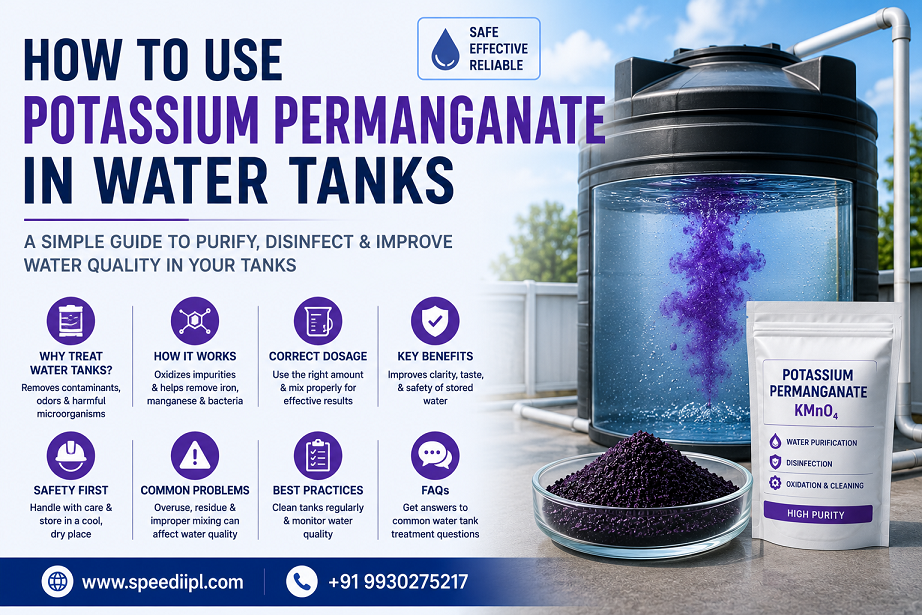
Water tanks are commonly used for storing water in residential, commercial, and industrial settings. However, stored water can develop contamination over time due to bacteria, iron, manganese, algae, and organic impurities. Without proper treatment, water quality can deteriorate, leading to odor, discoloration, and health risks.
One of the most effective solutions for water tank purification is potassium permanganate. Known for its strong oxidizing properties, potassium permanganate helps remove contaminants, eliminate odors, and improve water safety.
In this guide, we will explain how to use potassium permanganate in water tanks, correct dosage, benefits, and safety precautions.
Why Water Tanks Require Treatment
Stored water is prone to contamination due to environmental exposure and stagnant conditions.
Common Contaminants in Stored Water
- Iron and manganese
- Bacteria and microorganisms
- Algae growth
- Organic matter
- Sediments and impurities
Bacterial Growth and Odor Issues
Over time, water tanks may develop:
- Foul smell (due to sulfur compounds)
- Slimy deposits
- Discoloration
- Health risks from microbial contamination
Regular treatment is necessary to maintain clean and safe water.
How Potassium Permanganate Works in Water Tanks
Potassium permanganate (KMnO₄) acts as a powerful oxidizing agent in water treatment.
Oxidation Process Explained
When added to water:
- It reacts with dissolved contaminants
- Converts iron and manganese into solid particles
- Breaks down organic impurities
- Neutralizes odor-causing compounds
Removal of Iron and Manganese
- Iron → oxidized and filtered out
- Manganese → converted into insoluble particles
- Sulfur → neutralized to remove odor
This process significantly improves water clarity and quality.
Correct Dosage and Mixing Methods
Using the right potassium permanganate dosage for water treatment is essential.
Recommended Dosage for Water Tanks
- Typically 1–2 mg/L per mg/L of iron
- Adjust based on contamination level
- Always test water before dosing
Proper Mixing and Dilution Techniques
- Dissolve potassium permanganate in water before adding
- Ensure even distribution in the tank
- Allow sufficient reaction time
- Use proper filtration if required
Avoid direct addition of undissolved crystals.
Benefits of Potassium Permanganate Treatment
Using potassium permanganate in water tanks offers several advantages:
Improved Water Quality
- Removes contaminants
- Enhances clarity
- Improves taste and smell
Prevention of Harmful Microorganisms
- Controls bacterial growth
- Reduces algae formation
Effective Oxidation
- Breaks down iron, manganese, and organic matter
- Improves filtration efficiency
Cost-Effective Solution
- Affordable treatment method
- Reduces maintenance costs
Safety Measures While Using Potassium Permanganate
Proper handling is essential for safe use.
Safe Handling and Storage Precautions
- Wear gloves and protective gear
- Store in a dry, cool place
- Keep away from combustible materials
Monitoring Water Quality Regularly
- Check for discoloration (pink/purple indicates overdosing)
- Test water periodically
- Ensure proper filtration
Risks of Overusing Potassium Permanganate
- Chemical residue in water
- Unpleasant color
- Reduced water quality
Always use controlled dosage.
Common Water Tank Treatment Problems
Understanding common issues helps improve treatment efficiency.
Preventing Chemical Residue Buildup
- Avoid overdosing
- Use proper filtration
- Monitor water regularly
Routine Tank Cleaning Methods
- Clean tank periodically
- Remove sediment buildup
- Disinfect before refilling
Maintaining Long-Term Water Quality
- Regular treatment schedule
- Proper storage conditions
- Use of filtration systems
Best Practices for Clean Water Storage
- Keep tanks covered and sealed
- Avoid direct sunlight exposure
- Clean tanks at regular intervals
- Use proper water treatment methods
- Monitor water quality consistently
These practices ensure safe and clean water for long-term use.
Frequently Asked Questions About Water Tank Treatment
How do you use potassium permanganate in water tanks?
It is dissolved in water and added in controlled dosage to oxidize contaminants.
Is potassium permanganate safe for water tanks?
Yes, when used in proper dosage and followed by filtration.
Can it remove bad smell from tank water?
Yes, it effectively removes sulfur odors and improves taste.
What happens if too much potassium permanganate is used?
It can cause purple discoloration and reduce water quality.
Conclusion
Using potassium permanganate in water tanks is an effective method for improving water quality, removing contaminants, and eliminating odors. Its strong oxidation capability makes it suitable for treating stored water in residential, commercial, and industrial systems.
When used correctly with proper dosage and safety measures, potassium permanganate ensures clean, safe, and high-quality water. Regular monitoring and maintenance further enhance its effectiveness, making it a reliable solution for water tank purification.