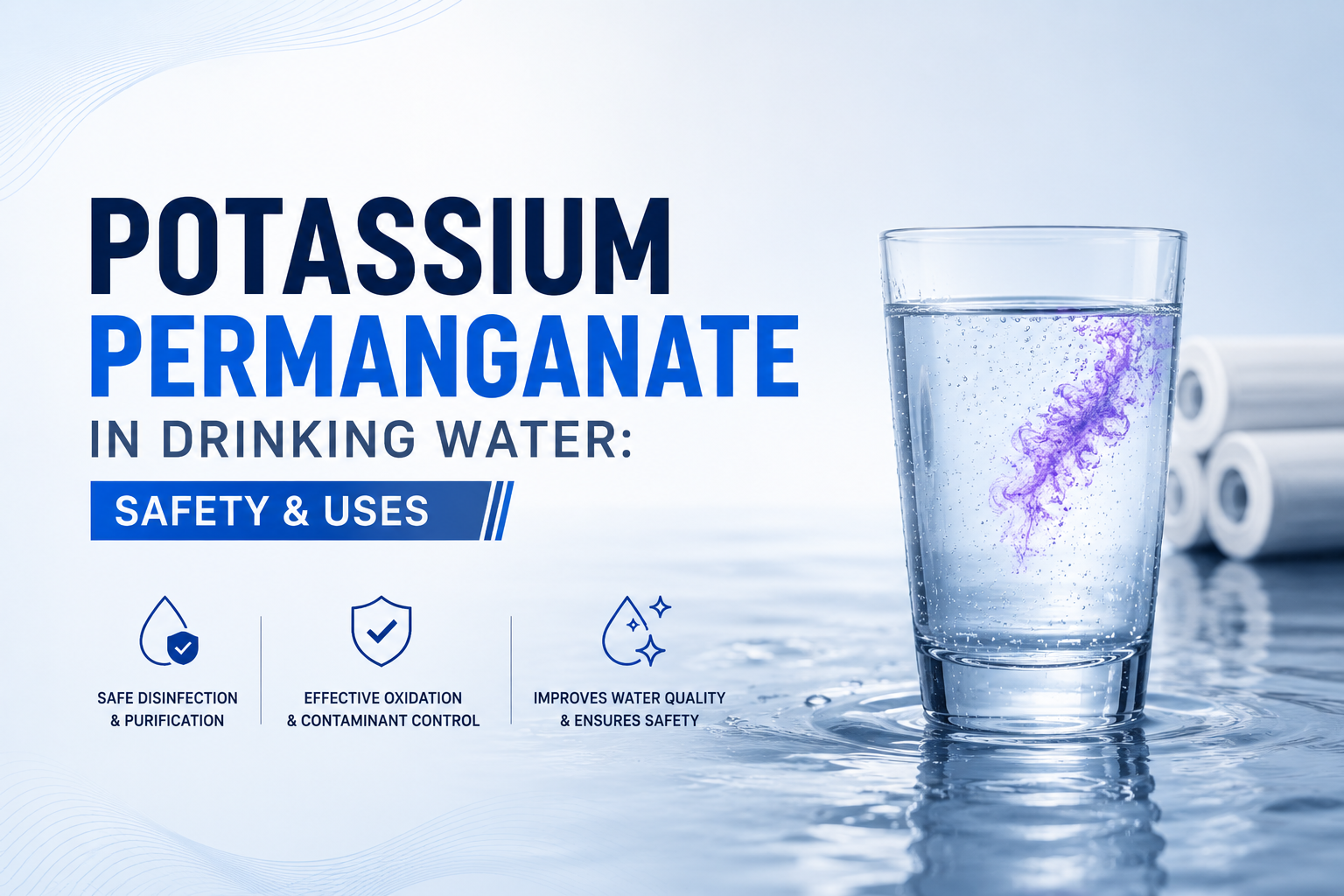
Water purification is essential to ensure safe and healthy drinking water. Contaminants such as iron, manganese, bacteria, and organic matter can affect water quality, taste, and safety. One commonly used chemical in water treatment is potassium permanganate.
Potassium permanganate is widely used in drinking water treatment due to its strong oxidizing properties. It helps remove impurities, eliminate odors, and improve overall water quality. In this guide, we will explore the uses, safety, applications, and best practices for using potassium permanganate in drinking water.
Why Potassium Permanganate Is Used in Drinking Water
Potassium permanganate (KMnO₄) is a powerful oxidizing agent used in water treatment processes. It reacts with dissolved contaminants and converts them into solid particles that can be easily filtered out.
Oxidation and Purification Benefits
- Oxidizes iron and manganese
- Removes organic impurities
- Breaks down harmful contaminants
- Improves water clarity
This makes potassium permanganate for water purification highly effective in both residential and industrial systems.
Removing Unpleasant Odors
Drinking water can sometimes have a bad smell due to hydrogen sulfide (rotten egg odor) or organic contamination.
Potassium permanganate helps:
- Neutralize sulfur compounds
- Remove bad taste and odor
- Improve overall water quality
Is Potassium Permanganate Safe?
Potassium permanganate is safe for drinking water treatment when used in controlled and recommended concentrations.
Recommended Concentration Levels
- Dosage depends on contamination levels
- Typically used in small measured quantities
- Excess dosing should be avoided
Proper filtration after treatment ensures no harmful residues remain in drinking water.
Health and Safety Considerations
- Overuse can cause pink or purple discoloration
- Direct consumption of untreated KMnO₄ is unsafe
- Must be used with proper filtration systems
Always follow water treatment guidelines and professional recommendations.
Applications in Drinking Water Systems
Potassium permanganate is used in various drinking water systems due to its effectiveness.
Municipal Water Treatment
- Used in large-scale purification plants
- Helps remove iron, manganese, and organic matter
- Improves water quality before distribution
Rural and Well Water Systems
- Common in well water treatment
- Removes iron staining and odor issues
- Improves drinking water safety in remote areas
Best Practices for Safe Use
Using potassium permanganate correctly ensures safe and effective water purification.
Storage and Handling
- Store in a cool, dry place
- Keep away from combustible materials
- Use protective gloves and goggles
Monitoring Water Quality
- Test water regularly
- Adjust dosage as needed
- Ensure proper filtration after treatment
Avoid Overdosing
Excess potassium permanganate can lead to discoloration and reduced water quality. Proper dosing is essential for safe use.
Frequently Asked Questions
Why is potassium permanganate used for purifying drinking water?
It oxidizes contaminants like iron, manganese, and sulfur, making them easier to remove through filtration.
Is potassium permanganate safe for drinking water?
Yes, when used in proper dosage and followed by filtration.
Can it remove bad smell from drinking water?
Yes, it effectively removes hydrogen sulfide and organic odors.
What happens if too much potassium permanganate is used?
It can cause pink or purple water discoloration and affect water quality.
Conclusion
Potassium permanganate in drinking water treatment is a highly effective method for improving water quality, removing contaminants, and eliminating unpleasant odors. Its strong oxidation capability makes it suitable for municipal systems, well water treatment, and industrial applications.
When used correctly and in proper dosage, potassium permanganate ensures safe, clean, and high-quality drinking water. Following best practices and safety guidelines is essential to achieve optimal results.
For reliable water treatment solutions, choosing high-quality chemicals and proper filtration systems is key to maintaining long-term water safety and performance.