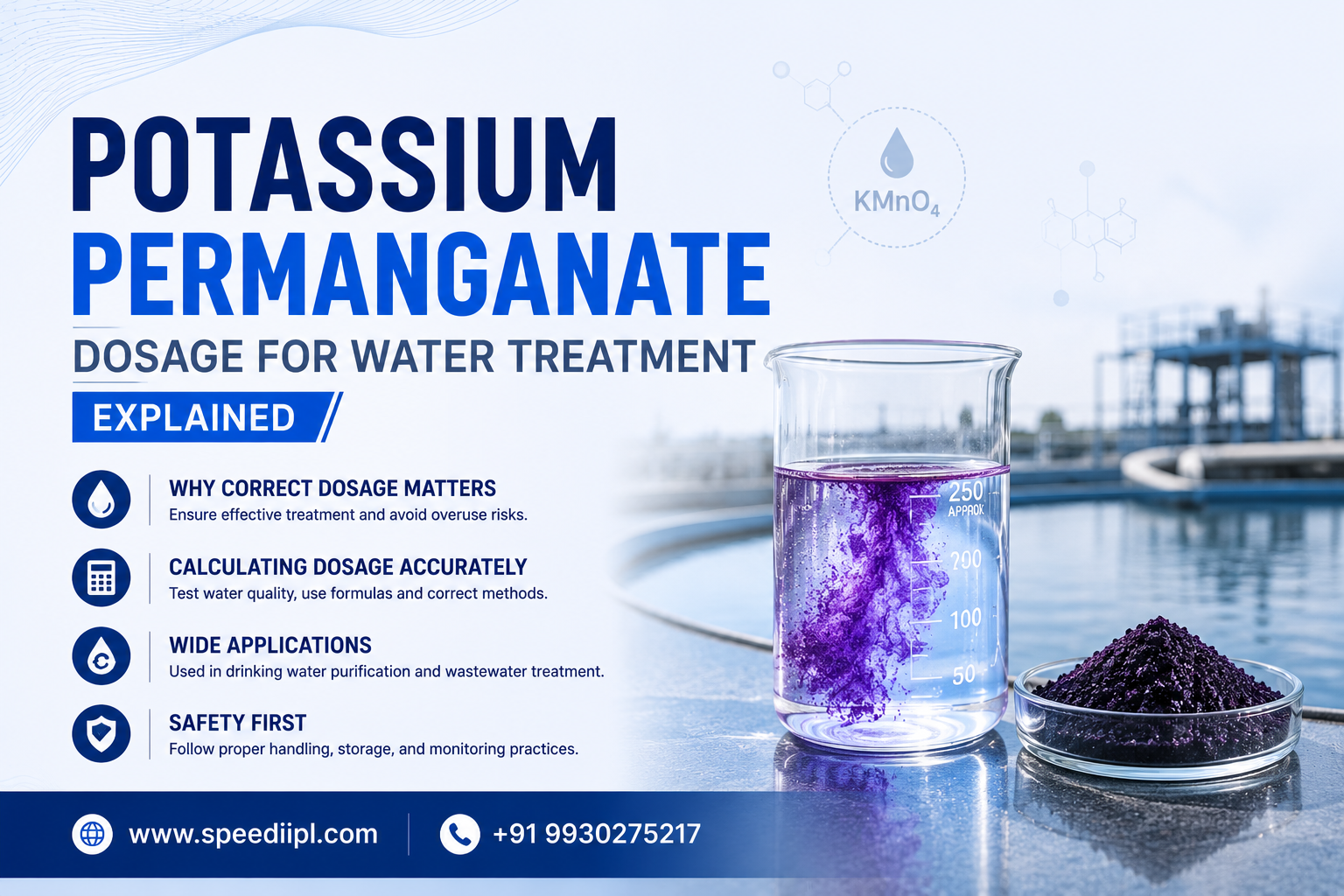
Water treatment is essential to remove contaminants such as iron, manganese, sulfur, and organic impurities. One of the most effective chemicals used in this process is potassium permanganate. However, using the correct dosage is critical to ensure effective purification and safe water quality.
Potassium permanganate dosage for water treatment depends on several factors, including water composition, contamination levels, and system design. In this guide, we will explain how dosage works, how to calculate it, common applications, and important safety measures.
Why Correct Dosage Matters
Using the right amount of potassium permanganate is essential for efficient water treatment.
Risks of Overuse
- Pink or purple discoloration in water
- Chemical residue in treated water
- Potential health concerns
- Damage to filtration systems
Importance of Balanced Treatment
- Ensures complete oxidation of contaminants
- Improves filtration efficiency
- Maintains safe water quality
- Prevents unnecessary chemical waste
Accurate dosing ensures optimal performance in potassium permanganate water treatment systems.
Calculating Potassium Permanganate Dosage
Proper calculation is necessary for effective water purification.
Water Quality Testing Basics
Before determining dosage, test water for:
- Iron concentration
- Manganese levels
- Hydrogen sulfide presence
- Organic content
Laboratory or field testing helps define the exact treatment requirement.
Dosage Formulas and Methods
General guideline:
- 1 mg/L potassium permanganate per 1 mg/L iron
- Higher amounts required for manganese and sulfur
Typical calculation steps:
- Measure contaminant concentration
- Apply oxidation ratio
- Adjust for flow rate and system size
- Fine-tune based on results
Professional systems often use automated dosing for accuracy.
Common Applications in Water Treatment
Potassium permanganate is widely used across different water systems.
Drinking Water Purification
- Removes iron and manganese
- Eliminates odor and taste issues
- Improves clarity and safety
Wastewater Treatment Applications
- Oxidizes organic contaminants
- Controls odor in wastewater systems
- Enhances filtration efficiency
Industrial Water Treatment
- Used in chemical processing
- Applied in cooling and boiler systems
- Maintains pipeline cleanliness
This makes potassium permanganate for water purification highly versatile.
Safety Measures During Use
Proper handling of potassium permanganate is important for safe and effective use.
Storage and Handling Precautions
- Store in a cool, dry place
- Keep away from flammable materials
- Use protective gloves and goggles
- Avoid direct skin contact
Monitoring Treated Water
- Check for color changes (sign of overdosing)
- Test water regularly
- Ensure proper filtration after dosing
Avoid Overfeeding
Excess chemical can reduce water quality and cause operational issues.
Benefits of Proper Potassium Permanganate Dosage
- Efficient removal of contaminants
- Improved water clarity and taste
- Reduced maintenance costs
- Longer system lifespan
- Safe and reliable water treatment
Frequently Asked Questions
How much potassium permanganate is used in water treatment?
Typically, 1 mg/L is used for 1 mg/L of iron, but actual dosage depends on contamination levels.
Can overdosing potassium permanganate be harmful?
Yes, it can cause discoloration and reduce water quality.
Is potassium permanganate safe for drinking water?
Yes, when used in proper dosage and followed by filtration.
How is dosage controlled in systems?
Through manual calculation or automated dosing systems.
Conclusion
Potassium permanganate dosage for water treatment plays a crucial role in ensuring effective purification and safe water quality. Accurate dosing helps remove contaminants efficiently while preventing chemical overuse and system issues.
Whether used in drinking water, wastewater, or industrial systems, proper calculation and monitoring are essential for achieving the best results. With the right approach, potassium permanganate remains a reliable and cost-effective solution for modern water treatment needs.